
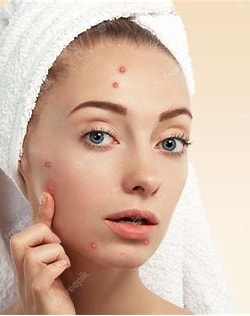
Understanding Adult and Menopausal Acne
Menopausal acne is more likely to be both painful and located on the body—especially the trunk. Getting a clear diagnosis helps us target the root causes and restore your skin’s natural glow.
Adult acne is defined medically as acne begining after age 25, though informally it’s often used to describe acne after age 40. Menopausal acne, on the other hand, presents during perimenopause—the transitional years around natural menopause (ave age 51.4)—so typically appears later.
Hormonal acne
Both types involve a similar dysfunction of the pilosebaceous unit:
-
Excess or altered sebum production
-
Thickened superficial skin layers
-
Pigment irregularities
-
Overgrowth of Cutibacterium acnes
-
Local inflammation and impaired skin immunity
In short, acne is an inflammatory disorder with multifactorial pathogenesis—many of our treatment strategies will improve both adult and menopausal types.
Contributing Factors
-
Hormonal changes: You may notice other symptoms of androgen excess as estrogen-to-androgen ratios shift. It can be from testosterone therapy when the levels are too high.
-
Stress: More closely linked to menopausal acne; mindfulness, breathwork, and yoga are invaluable. Try a class with one of our excellent instructors—or join me at Hatha Yoga & Fitness.
-
Body composition: Obesity contributes more to menopausal acne. Even modest improvements in lean body mass can benefit your skin.
-
Sun damage: Predisposes to both types. I recommend higher-grade medical sunscreens—schedule a consultation at Hada Cosmetic Medicine to find your ideal product.
-
Hair changes: Hair loss or unwanted hair growth (hirsutism) are more common with menopausal acne.
Hormonal Acne Before and During Hormone Use
Hormonal acne before menopause often appears in women in their 20s to 40s, driven by cyclical hormonal fluctuations—especially the luteal-phase rise in progesterone and the relative decline in estrogen. This combination stimulates excess sebum and inflammatory changes in the skin, leading to monthly flares along the lower face, jawline, and neck. Elevated cortisol from stress and insulin resistance can further amplify androgen activity, worsening breakouts.
Hormonal acne due to hormone use—such as oral contraceptives, hormone replacement therapy, or anabolic or progesterone-containing supplements—occurs when exogenous hormones disrupt the natural ratio of estrogen, progesterone, and androgens. Some synthetic progestins have androgenic properties that directly trigger acne, while abrupt changes in estrogen exposure can alter sebaceous gland responsiveness. In these cases, careful evaluation of the hormone formulation and metabolism is essential. Adjusting or discontinuing the hormone source, or adding targeted anti-androgen support, can restore balance and calm the skin.
Diagnosis and Treatment
Lesion appearance can overlap, so diagnosis isn’t always straightforward. Both conditions can be resistant to standard therapies, but menopausal acne often responds better when underlying hormonal imbalances are addressed.
We suggest procedures, microbiome balancing face washes, and balancing hormones. One of the most effective tools we use for hormonally driven acne is Diindolylmethane (DIM)—a natural compound derived from cruciferous vegetables such as broccoli, kale, and Brussels sprouts. DIM helps restore hormone balance by blocking the conversion of testosterone to dihydrotestosterone (DHT), the potent androgen that increases sebum production and triggers inflammatory acne lesions. This is proven by cell culture and animal studies. By reducing DHT activity, DIM supports clearer skin, decreased oil production, and improved hormonal equilibrium. DIM also supports heart health. Our DIM+ is of exceptional quality if you would like to come and try. It’s never too soon to get evaluated—schedule a consultation today with us at Hada Cosmetic Medicine. and let’s get your skin back to healthy, confident radiance.